
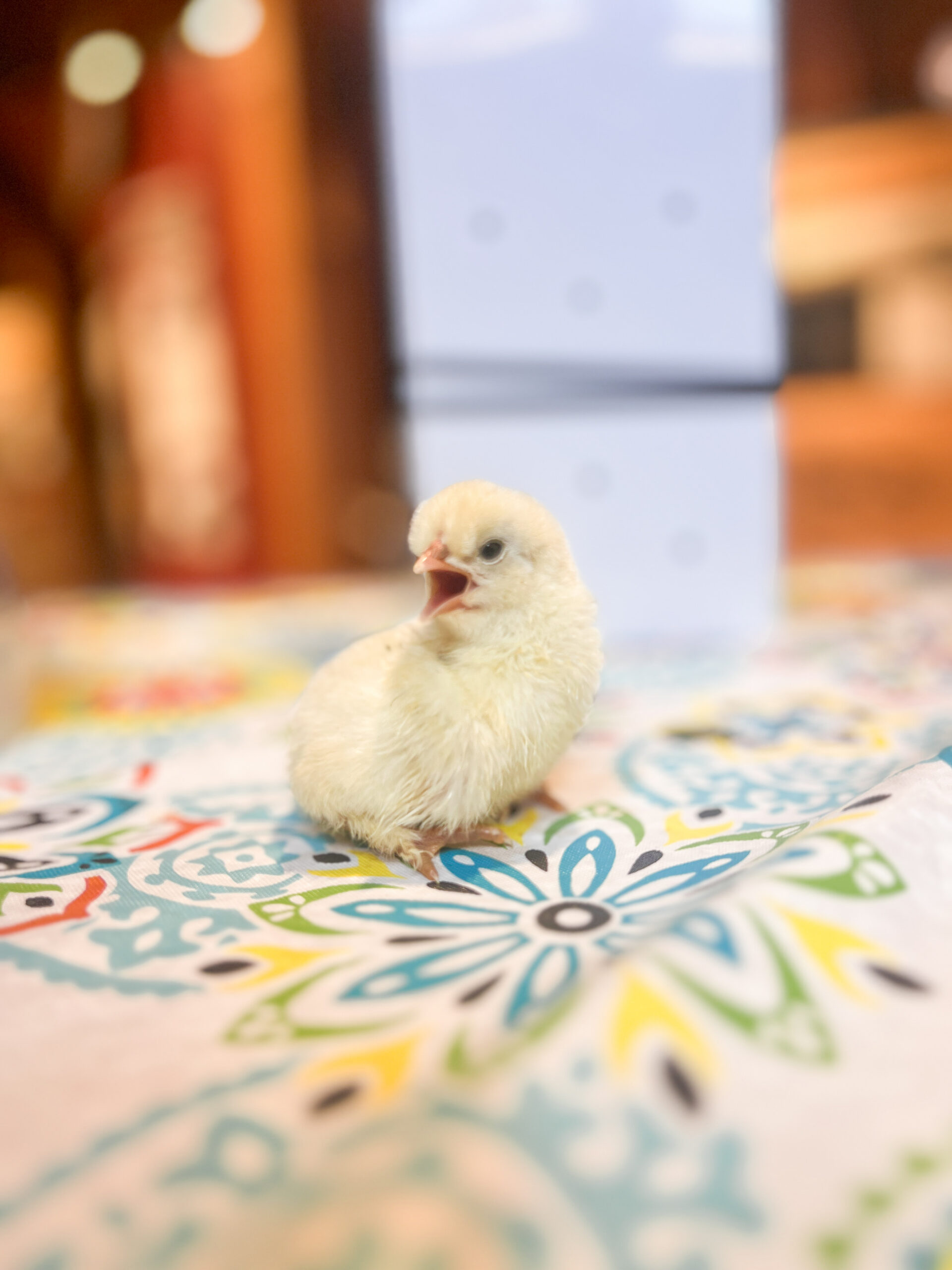
Hope and Hatching Chickens
“Where are you going?”
It was 8 PM on a Sunday evening and my husband was (rightfully) curious where I was headed. As I gathered cords and cameras from around the house, I let him know, “I’m going to check on the chicks.”
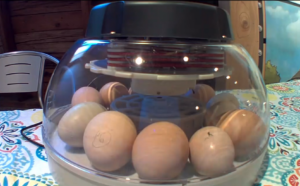 For the last 20 days, we’d been incubating a dozen fertilized chicken eggs from my mom’s farm. Eggs are supposed to hatch at the 21-day mark (give or take a few hours) and I hadn’t seen so much as a pip. So, like any good, nervous mother, I decided I needed eyes on my potential little ones around the clock. So an end-of-the-weekend trip to the museum was needed to set up my motion camera on our unhatched eggs.
24 hours later, we still didn’t have any chicks. Our window of viable chicks hatching was narrowing. We knew from candling that we had six to eight eggs that had developed, but like most things in agriculture, we were relying on hope.
Hope is a funny thing. It is received as an overwhelmingly positive ideal. Personally, I’ve found myself in many situations where hope was paramount to my success.
Politics.
Dating in my late 30s.
Fundraising.
Agriculture.
Without the unshakable belief that something good or planned would be the result of the work, none of them (for me) felt possible. But in all those situations, hope let me down too. Lost elections. Bad dates. Unrealized major gifts. Imperfect candidates. Even worse dates. Unhatched eggs.
Hope holds negative feelings too – anxiety, disappointment, uncertainty – all these can live within the corners of hope. And that’s ok! None of those feelings have to be permanent. So, when day 21 arrived, and not a feather was in sight, my hope was dwindling.
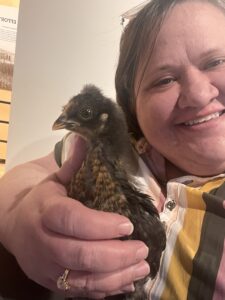
Luckily, eggs don’t have corners and hope is abundant.
By the end of day 22, four chicks had pipped their way out of their eggs and had taken up residence at the Stockyards Ag Experience.
So, for several weeks, visitors to the Stockyards Ag Experience could learn about the life cycle of a chicken. I learned a lot too – what they eat, how you tell their gender, how often they poop (it’s a lot). Their chorus of chirps and peeps was our spring soundtrack, but the little flock had outgrown their space and so back to the farm they went.
Even though things are back to “normal” at the museum, we are still talking about the chicks. And I’m still thinking about hope.
I’m grateful for the harder side of hope – it builds resilience, tests patience and keeps me humble. But more than anything, I’m grateful that hope exists at all. For that feeling of wonder and anticipation that anything is possible.
Especially with chickens.