
Meat Packing Before Refrigeration at John Morrell & Co.
Ever wonder how the John Morrell & Co. meat packing plant kept meat from spoiling through the hot summer months? The answer is one word: ice!
Until the invention of refrigeration machinery, uncured meat packing work was typically confined to the winter months to keep carcasses cool. Ice houses were utilized to keep meat from spoiling before the invention of electrical refrigeration. 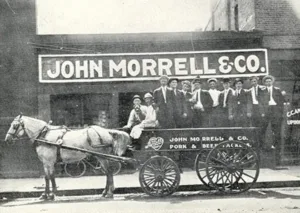
Typically carrying thousands of tons of ice, ice houses would act as a reservoir for keeping uncured meats fresh. The ice was harvested from nearby bodies of water, such as the Big Sioux River, and the mill pond near Queen Bee Mill in Falls Park. This ice was then stored in an insulated subterranean pit, where it could be held all summer.
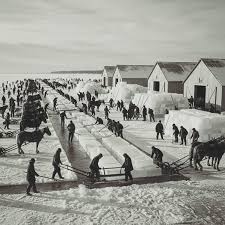 5,000 – 10,000 tons of ice was needed to keep the plant covered for the entire summer, so this practice was not sustainable. Ice shortage was a source of great worry, as without a fruitful ice harvest, the company would have to consider the possibility of paying great costs for smaller amounts of ice. Owner T. D. Foster wrote to Liverpool about his worries for the summer months, “The cooling of our plant the coming summer is now an important problem. We have saved about 5,000 tons of ice. It will take 10,000 to run us. There is no ice here and does not look like any (though any day conditions may change). If we have to go north it will mean that the ice will cost us equal to 2 ½ or $3 per ton in our packing house next summer.” Luckily, the invention of electricity based refrigeration was in the near future.